Halloween Sale
--
Days
--
Hours
--
Minutes
--
Seconds
Book a call
Halloween Sale
--
Days
--
Hours
--
Minutes
--
Seconds
Book a call
Job Guarantee — or 100% money back

Web3 SolidityBootcamp

The most advanced Solidity curriculum on the internet. A 4-month, project-based program designed for your transition from Web2 to Web3 — master Ethereum, DeFi, and smart contracts.

  • Online · part-time
  • 20 hours/week avg
  • Cohorts of 10
Blockchain engineer building smart contracts

16 Weeks

Course duration

20h/Week

Time commitment

4.9 Stars

Rating on Course Report

+$26,500

Average salary increase

$139,952

Avg blockchain engineer salary

Max 10

Students per cohort

50+

Cohorts conducted

100+

Students trained since 2022

Metana engineers work at top companies

Google
Amazon
Microsoft
Meta
Netflix
IBM
Nike
eBay
McKinsey
Barclays
Commonwealth Bank
ConsenSys
Polygon
Binance
Coinbase
Algorand

Overview

The longest-running Web3 bootcamp.

Metana goes beyond teaching Solidity, tokens, and NFTs — combining a project-based curriculum with expert mentorship so software developers can become senior blockchain engineers and fast-track their transition into a Web3 career.

  • Longest-running Web3 bootcamp (verified via Wayback Machine)
  • Project-based, hands-on curriculum
  • Expert mentorship pathway to senior-level engineering
  • Designed for developers upskilling from Web2 to Web3

Duration

16 weeks (4 months)

Format

Online, part-time, self-paced with live components

Hours per week

20h avg (ranges 5–35 by week & experience)

Financing

Climb Credit from $69–$214/mo & Fortify education loans

Curriculum

16 modules from fundamentals to assembly-level mastery.

Every module is project-based. You write real contracts, break real code, and ship real systems — from your first ERC-20 to non-trivial contracts written entirely in Yul.

Module 1 of 17

01 — Ethereum & Smart Contract Fundamentals

What you'll cover

  • Blockchain basics
  • Ethereum architecture
  • Transaction mechanics
  • How smart contracts work

Outcomes

What you'll be able to build and break.

Master Solidity programming from fundamentals to advanced patterns
Understand Ethereum blockchain architecture and transaction processing
Develop and audit secure smart contracts following industry best practices
Create token standards and NFTs (ERC-20, ERC-721, ERC-1155)
Build Web3 frontends using ethers.js and Web3.js
Design and implement DeFi protocols and liquidity mechanisms
Write assembly-level code (Yul) for gas optimization
Perform security audits and identify vulnerabilities
Implement Layer 2 scaling, account abstraction, and gasless transactions
Integrate oracle data into smart contracts
Write non-trivial smart contracts completely in assembly (Yul)
Create an Ethereum wallet from scratch and recreate hacks that drained millions

Tools & tech

The full Web3 engineering stack.

You graduate fluent in the exact tools senior blockchain engineers ship with every day — from Solidity and Yul to Layer 2 rollups and Chainlink oracles.

Solidity
Solidity
Yul (assembly)
JavaScript / TypeScript
Hardhat
Hardhat
Remix IDE
Remix IDE
Truffle Suite
Truffle Suite
Ethers.js
Ethers.js
Web3.js
Web3.js
MetaMask
MetaMask
Chainlink
Chainlink
React.js
React.js
Next.js
Next.js
Cairo (Starknet)
Cairo (Starknet)
Git & GitHub
L2 Rollups

Why Metana?

The most advanced curriculum, backed by a guarantee.

Job guarantee

100% refund if you don't land a $50k+ job within 10 months of graduating.

Weekly 1-on-1 code reviews

Personal feedback from senior engineers every single week.

Small cohorts

Hard-capped at 10 students for a genuinely personalized experience.

80%+ hands-on

Most of your time is spent coding and hacking — not watching tutorials.

AI learning units

AI-assisted learning and dedicated job placement support included.

Hired at top companies

Graduates work at Google, Coinbase, ConsenSys, Polygon, Binance, Meta and more.

Without vs with

The difference is a real pathway.

Without Metana
  • Random tactics with no clear pathway
  • Stuck in tutorial hell, watching instead of building
  • No feedback loop or code review
  • Guessing at security instead of learning to break contracts
  • No accountability and no job on the other side
With Metana
  • A clear vision and a structured pathway to senior engineering
  • Learning through practice — 80%+ coding and hacking
  • Weekly 1-on-1 code reviews with senior engineers
  • Security-first: you recreate historical hacks and break real contracts
  • A job guarantee — get hired or your money back

Web3 roles & salaries

Multiple career paths, strong compensation.

Graduating opens multiple Web3 career paths with strong pay across roles. Industry averages per web3.career.
Role
Average
Range
Smart Contract Developer
$120k
$60k – $200k
Solidity Developer
$100k
$58k – $180k
Blockchain Developer
$91k
$50k – $175k
Senior / Lead Developer
$120k
up to $200k
Architecture Developer
$117k
$60k – $200k
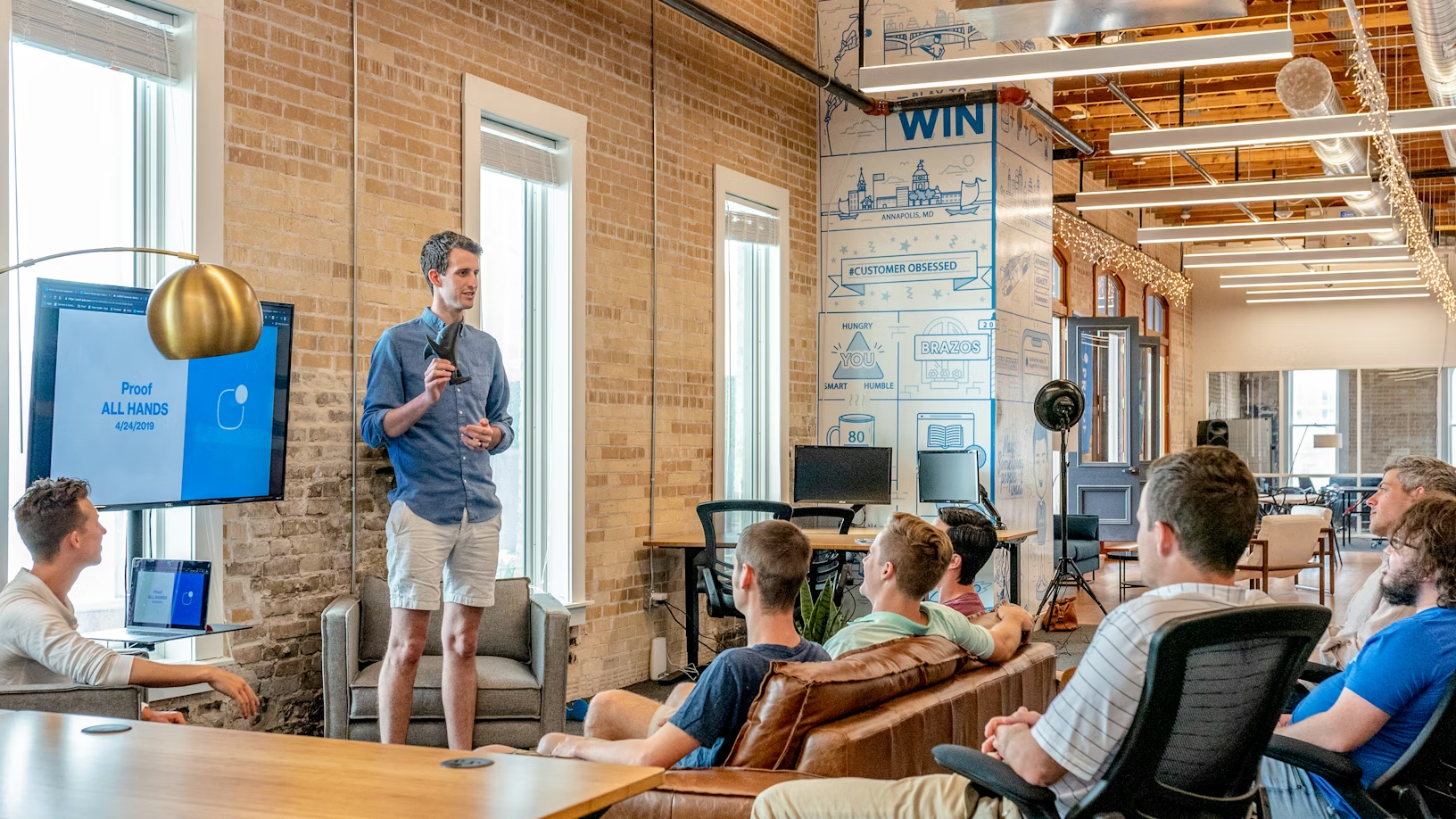
Metana graduate landing a Web3 engineering role
Job guarantee & refund policy

Get hired — or your money back.

Complete the requirements and actively job search. If you don't land a role paying $50,000/year within 10 months of graduating, you receive a full tuition refund.

  • 100% tuition refund if no $50k+ ($4,166/mo) offer within 10 months
  • Risk-free 2-week refund period, no questions asked
  • Pause and resume without financial penalty if life interferes

Meet the instructors

Learn from working senior engineers.

Two lead instructors with 7+ years of combined blockchain teaching experience, plus a Web3 + gaming builder.

Dhruvin Parikh

Dhruvin Parikh

Senior Blockchain Engineer, Frax Finance

In blockchain since 2017. Professor at George Brown College & York University — Canada's first blockchain programs.

David Killen

David Killen

Senior Blockchain Engineer, TrustWallet

Former ConsenSys / Truffle Suite engineer and qualified solicitor bringing deep protocol and security expertise.

Aaron Guyett

Aaron Guyett

Co-Founder & CTO, Unnamed.gg

Ex-Amazon engineer and Web3 + gaming builder with a track record shipping production systems at scale.

Graduate outcome
"I just got a job offer a few hours ago at 110k plus 20K tokens — 130k USD in Thailand. This is only a few weeks away. This is gonna be a great time."

Mathieu Bertin

Blockchain Engineer

Career success — JobCamp™

Skills for your first Web3 job — and every job after.

Metana's career success team equips you with the professional skills needed to land and grow in a Web3 career — included free with the bootcamp.

First Impressions

LinkedIn, GitHub, and a technical resume that gets you noticed.

The Hunt

Networking, job search strategy, and freelance pathways.

The Interview Process

Technical and behavioral interview preparation.

Technical Know-How

Common questions, whiteboarding, and take-home practice.

Admissions process

Four steps to your cohort seat.

The coding assessment is the most important component. Each cohort is capped at 10 students for a personalized experience.

1

Book your call

Speak with an admissions officer about your goals and background.

2

Create your career plan

Map out a career plan and choose the pathway that fits you.

3

Complete a coding assessment

A short assessment within 3 days — extensions available on request.

4

Secure your cohort spot

Receive your offer and lock in your seat in the next cohort.

Tuition & financing

Flexible plans, backed by a job guarantee.

Plan I
$7,500$9,400

Upfront tuition

  • Job Guarantee
  • Lifetime curriculum access
  • Daily 1-on-1 stand-ups
  • Weekly code review
  • JobCamp & 1-year career coaching
Book a call
Plan II
$11,700

Upfront tuition — extended support

  • Everything in Plan I
  • 2 weekly code review sessions
  • 3-year career support
  • Enhanced advisor matching
  • Additional perks and benefits
Talk about financing
Zero risk to apply. A risk-free 2-week refund window applies to everyone, no questions asked.
FAQ

Questions, answered.

The course follows an 85% coding, 15% tutorials split, because the fastest way to learn Solidity well is by writing and breaking real smart contracts rather than watching lectures. Every week centers on a hands-on assignment that takes up the bulk of your time, supported by video lessons and written material delivered through our learning management system so you can study on your own schedule between live sessions. On top of that self-paced content, you get two live touchpoints weekly: a group office-hours session where the cohort works through prep questions, previews the next assignment, and discusses current crypto and Web3 news, plus a private 30-minute one-on-one code review where your instructor gives direct feedback on your actual code instead of generic critique. As you approach graduation, this same rhythm carries into JobCamp, where the weekly cadence shifts from smart-contract assignments to resume, portfolio, and interview-prep work, with the group and 1-on-1 sessions still running throughout.

Each week is built around one central assignment — usually the heaviest time commitment — layered with structured support so you're never learning in isolation. You get a 1-hour group class or discussion covering prep questions, an introduction to the next assignment, and current crypto news; a 30-minute 1-on-1 code review where an instructor gives direct feedback on your actual submitted code; and self-paced study time using the videos and readings we provide for that module, whether it's Solidity fundamentals, smart contract security, DeFi protocols, or gas optimization in Yul. Interview prep support is available whenever you need it, not just during JobCamp at the end. Because the curriculum runs 16 modules deep — from Ethereum fundamentals through Layer 2 scaling, account abstraction, and restaking — the specific mix of lecture, lab, and review time shifts week to week, but the group-class-plus-1-on-1-plus-assignment structure stays constant for all 16 weeks.

Three things set it apart. First, personalized instruction: every student gets a weekly 30-minute 1-on-1 code review with a senior engineer, not just recorded lectures, and cohorts are hard-capped at 10 students so instructors can actually track your progress and weaknesses. Second, a hands-on emphasis — over 80% of the program is spent coding and hacking rather than sitting in tutorial hell, including recreating historical smart contract hacks and building an Ethereum wallet from scratch. Third, curriculum depth: this course goes well beyond typical Solidity tutorials into writing non-trivial contracts in raw assembly (Yul), formal security auditing techniques, DAOs, account abstraction, and Layer 2 scaling. It's also backed by a 100% tuition refund guarantee if you don't land a job paying at least $50,000/year within 10 months of graduating, and graduates have gone on to work at companies including Google, Coinbase, ConsenSys, Polygon, Binance, and Meta.

Being familiar with Solidity is a real advantage going in, but it isn't required — the first curriculum module (Ethereum & Smart Contract Fundamentals) starts from blockchain basics and Ethereum architecture before the second module teaches Solidity syntax, data types, functions, and control flow from the ground up using Remix and Hardhat. In practice, learning Solidity's syntax is the easy part; the hard part, and the reason this bootcamp exists, is learning to write Solidity that's actually secure. Later modules on access control, common vulnerabilities, and advanced smart contract security are where most of the real difficulty — and most of the value — lives. What matters more than prior Solidity exposure is the JavaScript/TypeScript and general programming background covered in the next FAQ, since that's the foundation the Solidity-specific material builds on from week one.

Yes. This isn't a web development bootcamp — the focus is smart contract engineering — so we assume you're already comfortable writing unit tests in JavaScript and building simple web applications before you start. That matters because module 5, Frontend Integration & Web3 Development, has you connecting smart contracts to real interfaces using Web3.js, Ethers.js, and wallet integrations like MetaMask, and later modules build DeFi and NFT projects on top of that same frontend layer. React.js, Next.js, and a CSS framework such as Tailwind are recommended so you can move quickly through those modules, but they aren't a hard requirement — you can pick them up alongside the coursework if you're solid on core JavaScript or TypeScript fundamentals. If you're a complete beginner to programming rather than just new to Web3, the Web3 Beginner Bootcamp is the better starting point before this one.

Security is a genuine priority here — most assignments are hacking-based, and you won't graduate without completing them, including recreating historical exploits that drained real protocols of millions of dollars. Modules on access control, common vulnerabilities, advanced smart contract security, and static/dynamic analysis tools give you real audit-adjacent skills. That said, becoming a professional smart contract auditor straight out of any bootcamp, without prior development experience and a cybersecurity foundation, isn't realistic — auditing firms hire people who've already proven they can build secure systems, not just study them. This course is built to make you a strong, security-minded Web3 developer first; that developer foundation, combined with the security modules, is what an auditing career path gets built on afterward, whether that means specializing in-house at a protocol or pursuing dedicated audit training once you have real Solidity experience behind you.

This course is designed for programmers with at least 2 years of general software development experience, including 1–2 years working with JavaScript- or TypeScript-based production code, comfort with Bash or shell scripting, and familiarity with Git and GitHub for version control. We check for this during admissions, not just assume it: after an intro call with an advisor about your goals and background, you'll complete a short coding assessment (typically due within 3 days, with extensions available on request) before you're offered a cohort seat. That bar exists because the curriculum moves fast — 16 weeks compress what's normally 2+ years of skill-building — and starting without those fundamentals in place makes it much harder to keep up. If you're earlier in your programming journey, the Web3 Beginner Bootcamp is built specifically for that starting point instead.

It varies week to week rather than being a flat number — expect anywhere from 5 to about 35 hours depending on what that module covers and how much prior experience you bring to it. We recommend reserving at least 20 hours per week as your baseline, since that's the average commitment across the full 16 weeks, but some modules (like smart contract security audits or the DeFi and gas-optimization units) run heavier than others. Your weekly time splits across a 1-hour group session, a 30-minute 1-on-1 code review, and the assignment itself, which is usually where most of those hours go. Because cohorts are capped at 10 students, instructors can flag early if your pace looks off track and help you adjust rather than letting you fall behind silently until it's too late to catch up.

Large classes make people communicate less, and less communication is exactly what we're trying to design out of this program. Capping cohorts at 10 students keeps the instructor-to-student ratio low enough that your weekly 1-on-1 code review is actually personalized — instructors know your specific code, your specific weaknesses, and where you're stuck, rather than giving generic feedback to a crowd. It also makes the weekly group office-hours session more useful, since there's room for everyone's prep questions to actually get answered instead of getting lost in a large chat. We would rather run more small cohorts — we have conducted 50+ since Metana started in February 2022 — than fewer large ones, because the quality of attention each student gets is the thing that actually determines whether you finish the 16-week program with real, job-ready skills.

Yes — our own testimonials say so, and there's a real chance you won't finish within the standard 16 weeks if you're not prepared to put in the hours. We're condensing what would normally take 2+ years of on-the-job skill-building into 4 months, so plan on reserving 20–30 hours per week; for some students, especially around the security and DeFi modules, it becomes close to full-time. What makes the difficulty worthwhile is what it replaces: instead of random tactics with no clear pathway, tutorial-hell with no feedback loop, and guessing at security, you get a structured curriculum, weekly 1-on-1 code reviews with senior engineers, hands-on practice breaking real contracts, and a job guarantee backing the outcome. If the pace doesn't fit your current schedule, extending your timeline is an option — see the next FAQ.

That's completely fine, and it's built into how the program works. As long as you're staying engaged and doing the work, we'll look at your specific situation and can move you into a later cohort rather than forcing you to drop out mid-curriculum. What we're watching for isn't slow progress on its own — some students genuinely need more than 16 weeks alongside a job or other commitments — it's whether you're still showing up and putting in effort. If you fall behind because you've stopped engaging rather than because life got in the way, you'll be asked to leave, since cohort seats are limited to 10 students and our resources are focused on students who are seriously working toward a blockchain career. The goal is flexibility for genuine effort, not an open-ended extension with no accountability attached.

Metana started in February 2022 and ran its first bootcamp that same year, making this one of our longest-running programs. Since then we've conducted more than 50 cohorts and trained over 100 students through this specific Solidity curriculum alone, refining the 16-module syllabus — from Ethereum fundamentals through DAOs, DeFi, Layer 2 scaling, and restaking — along the way based on what graduates actually needed on the job. That track record shows up in outcomes: graduates have gone on to roles at companies including Google, Coinbase, ConsenSys, Polygon, Binance, and Meta, with an average reported salary increase of $26,500 and blockchain engineer salaries in this space averaging around $139,952. The job guarantee — a full tuition refund if you don't land a role paying at least $50,000/year within 10 months of graduating — is backed by that same multi-year track record, not a new or unproven promise.

Talk to an advisor

Book a call with a real human before the next cohort fills.

Speak with an advisor. We'll map the right program to your goals - and lock in your enrollment offer.

20% off enrollment offer
Limited-time Halloween promo

20% OFF - limited-time enrollment offer.

Applied automatically when you book a call before the timer hits zero.

--
Days
--
Hours
--
Minutes
--
Seconds
  • Guarantee: Job or 100% money back
  • Expert-curated curriculum
  • On-demand mentor support
Advisor Elena RodriguezAdvisor Sarah JenningsAdvisor David Chen
Real advisors · reply within 2 hours

Book your call

Free