DEAL20% OFF
Pre Black FridaySALE
--
Days
--
Hours
--
Minutes
--
Seconds
Book a call
DEAL20% OFF
Pre Black FridaySALE
--
Days
--
Hours
--
Minutes
--
Seconds
Book a call
GLITCH40% OFF
Price Glitch40% OFF
00
Days
00
Hours
05
Minutes
00
Seconds
Claim 40% Off
GLITCH40% OFF
Price Glitch40% OFF
00
Days
00
Hours
05
Minutes
00
Seconds
Claim 40% Off
Enterprise Cohort Program

AI Training for Tech Teams

Your team has the tools. They don't have the system. AI for Technical Teams is a 4-week live cohort program that gives your entire engineering team — from junior devs to your most skeptical senior engineers — a shared system for using AI reliably, safely, and at a level that shows up in your metrics.

  • 4 weeks
  • 3h / week
  • Live + async
  • Built for 5-50 engineers
Engineering team using AI in production

The numbers your CTO can't ignore

95%

of AI pilots show no measurable ROI when evaluated beyond the pilot period (MIT, 2025)

7%

of AI spend goes to the workforce — 93% goes to technology (Deloitte, 2025)

70%

of employees are using "Shadow AI" — unvetted tools, no governance, no training (Microsoft, 2025)

5-50

engineers — the team size this program is built for

7

hands-on deliverables each engineer takes into production

Overview

From AI access to AI capability — as a team.

AI for Technical Teams is a company cohort program built for engineering orgs that want to move from AI access to AI capability as a team, not as isolated individuals.

  • Every engineer goes through the same 4-week curriculum
  • Teams build foundational systems with a shared language and standards
  • The result is a team that reviews AI-generated code with shared criteria

The senior engineer problem

Your best engineers are skeptical of AI — and they're usually right.

Your most experienced engineers are the ones most likely to be skeptical of AI. The answer isn't less AI; it's a system that makes AI trustworthy enough for your best engineers to actually use.

What breaks without a system

  • Engineers paste errors into ChatGPT and trust the output
  • Code gets copy-pasted without real codebase context
  • AI suggestions are accepted without proper validation
  • Testing gets skipped or rushed
  • Review debt builds quietly until it breaks things

The fix: structured prompting, real evals, proper hooks, and governance that doesn't slow the team down.

Curriculum

Four modules. One production-ready AI system.

Module 01 of 04

Standardizing AI Usage & Governance

A shared, hands-on module every engineer completes together — the outputs become your team's standards, not one person's notes.

  • Shared prompt standards and version-controlled prompt templates
  • Team AI governance and shadow AI policy
  • Tool approval workflows and prompt versioning standards
  • Building a common language and criteria across the team

What your team ships

Seven deliverables — into production.

These aren't slides or certificates. Every engineer walks away with real, reusable systems applied to your actual codebase and shared across the whole team.

01

A shared prompt standard — version-controlled, team-documented prompt templates

02

A .cursorrules config applied at the repo level across your actual codebase

03

An LLM workflow architecture template as a standard starting point for AI features

04

A reusable team eval harness with golden datasets and scoring criteria

05

A team AI governance document covering shadow AI policy, tool approval, and prompt versioning

06

A production-grade final project per engineer built on your real stack

07

A pre-rollout reliability checklist as a shared standard for AI feature deployment

Tools & tech

The stack your team will standardize on.

Claude (Anthropic)Google GeminiGitHub CopilotCursorReplitLovableEmergent LabsGoogle ColabMCP (Model Context Protocol)GitGitHubReactJavaScript

Who this is built for

For teams with AI access but no shared system.

A strong fit
  • Engineering teams of 5-50 with AI tool access but no shared system
  • CTOs or engineering leads wanting measurable productivity gains
  • Orgs with failed AI pilots that didn't scale
  • Teams with mixed AI-enthusiastic and AI-skeptical engineers
  • Companies building LLM-powered features with no eval infrastructure
Not a fit
  • Non-technical teams looking for an overview
  • Lecture-series seekers who won't build
  • One-hour-workshop-and-certificate orgs

"This program fits engineering teams that have AI tool access but no shared system — and it is not a fit for lecture-only or non-technical audiences."

Program format

Hands-on, live, and yours to keep.

A cohort structure combining weekly live sessions, direct feedback, and on-demand support — running part-time at roughly 3 hours per week, with everything recorded.

Weekly office hours

Group live sessions with structured Q&A where your team works through real problems together.

Weekly assignment reviews

Direct expert feedback on the real work your engineers ship each week.

Live support on demand

Help mid-week between sessions so nobody stays blocked.

Recorded & yours to keep

All sessions recorded; all templates and systems your team keeps forever.

With vs without this program

The difference is a team-wide system.

Without
Every engineer prompts differently with no shared standard
A shared prompting system across the entire team
AI tools used inconsistently and reactively
AI embedded in team workflow with shared architecture
LLM features shipped with no evals
Every LLM feature has a test harness before shipping
Senior engineers avoid AI due to review overhead
Senior engineers trust a system they helped validate
Shadow AI with no governance
Team policy, prompt versioning, and tool governance
AI spend on licenses, nothing on enablement
4 weeks of structured enablement in output
Pilots work but scaling fails
A shared foundation that scales across the whole org
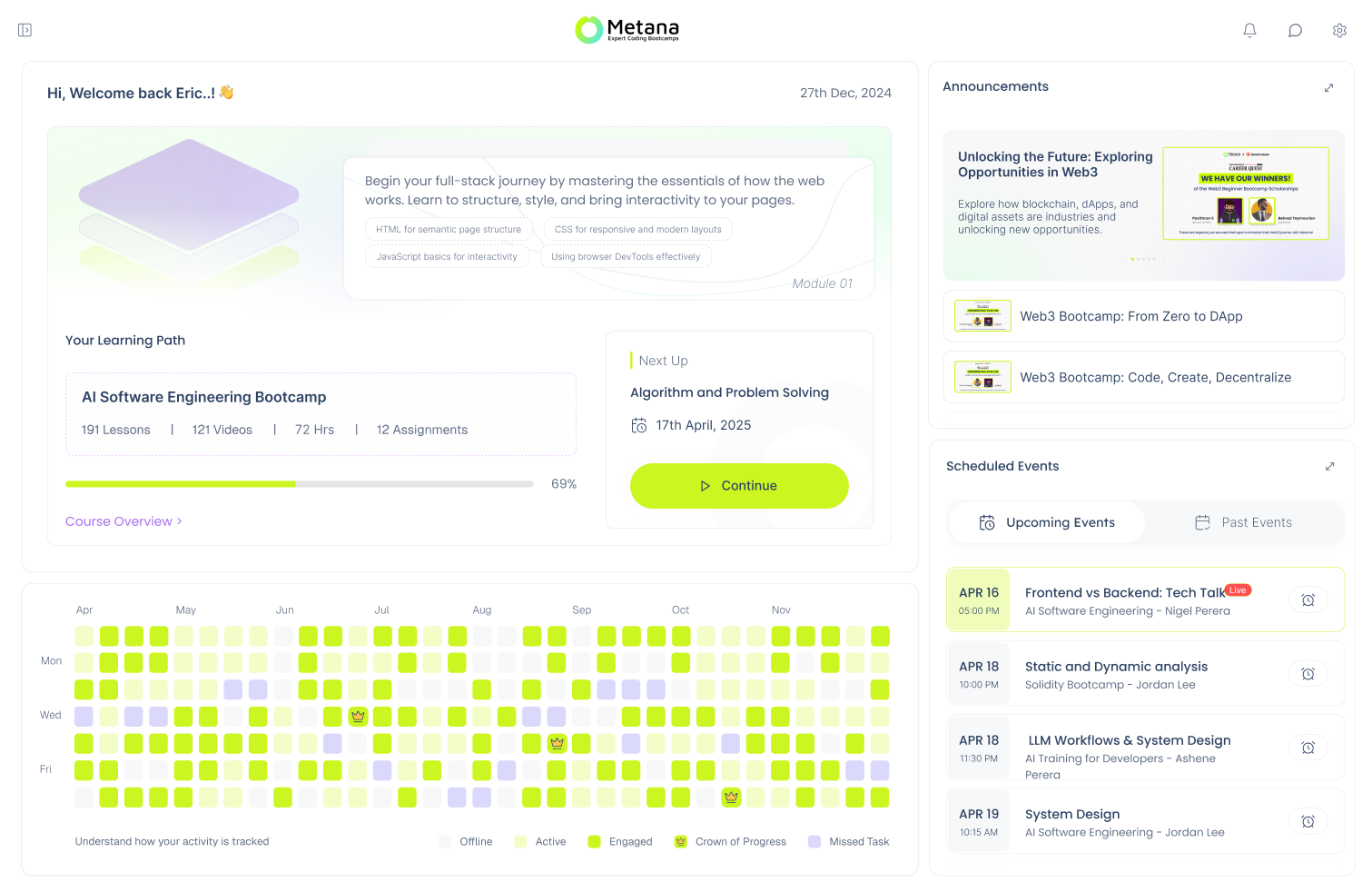
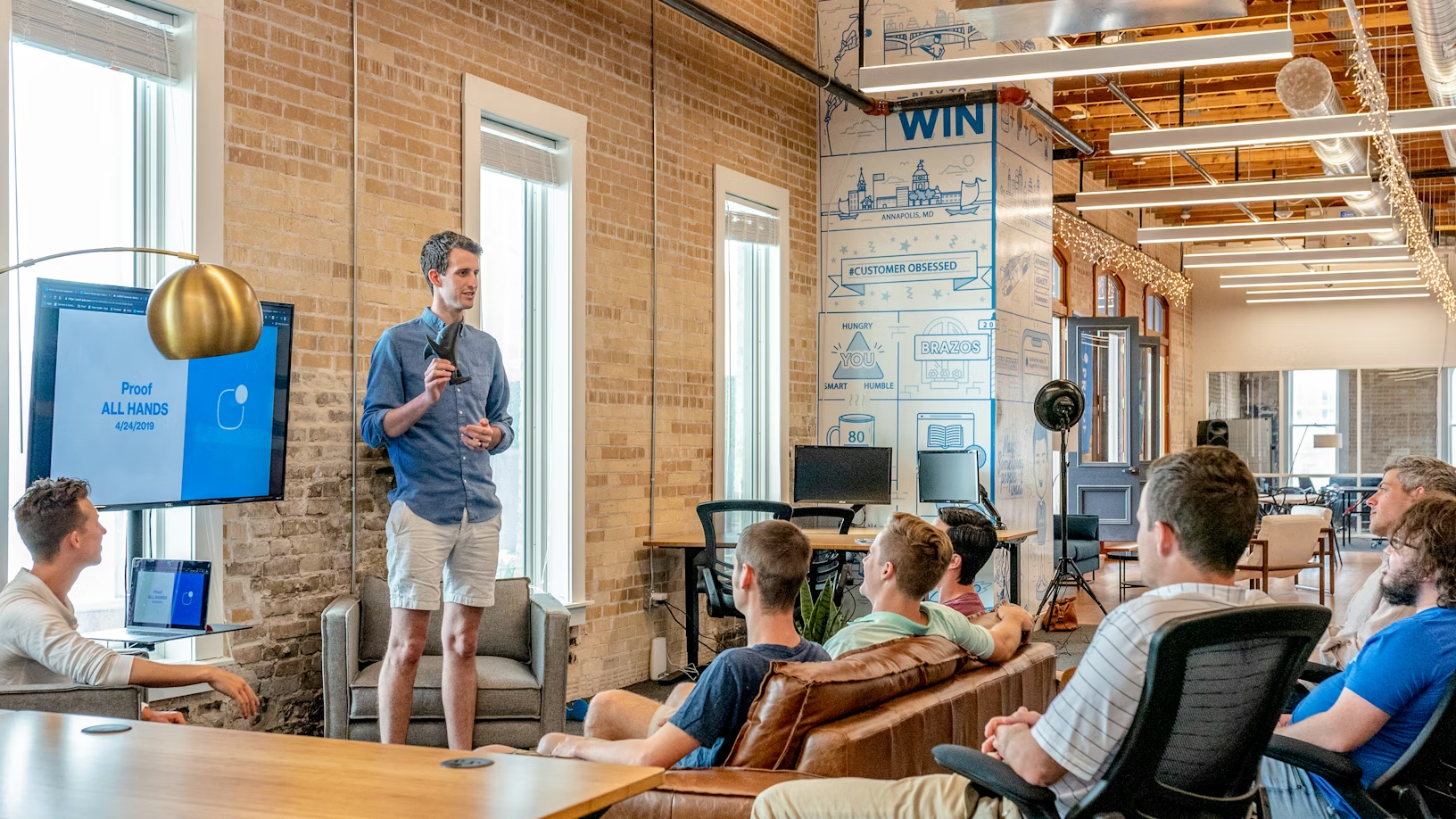
Live cohort session with engineersMetana learning platform dashboard

Why Metana

A shared foundation that scales across the whole org.

Most AI pilots die because they train individuals, not teams. Metana builds the same system into every engineer at once — governance, workflows, evals, and agents — so AI capability compounds instead of fragmenting.

  • Every engineer reviews AI-generated code with shared criteria
  • Built on your real stack and your real codebase
  • 7 production deliverables, not slideware

Enrollment options

Three ways to enroll.

$2,000 per seat / $4,000 full program · custom pricing for teams of 5+.

Individual seats

Open cohort

Enroll 1-4 engineers in a scheduled monthly cohort.

$2,000per seat
Get started

Private team cohort

Your team, your schedule

Enroll your entire team in a dedicated cohort on your schedule, built around your codebase.

Customcontact for pricing
Get started

Enterprise cohort

Teams of 25+

A custom program with org-specific case studies and a dedicated instructor.

Customcontact for pricing
Get started
How enrollment works: submit a team inquiry, take a 30-minute scoping call, then schedule the cohort and onboard your engineers.

Upcoming cohorts

Monthly open enrollment — or your own schedule.

FAQ

Questions, answered.

AI Training for Tech Teams is a structured, 4-week live cohort program by Metana that teaches software developers and engineers how to understand, apply, and build with generative AI tools in their day-to-day work — not just how to prompt a chatbot, but how to standardize AI usage across a whole team. The program is built for engineering teams of 5-50 people who already have access to AI tools like GitHub Copilot, Cursor, or Claude but lack a shared system for using them reliably. It covers four modules: standardizing AI usage and governance, LLM workflow and system architecture, evaluation and testing reliability, and agents, MCP, and production deployment. Each engineer walks away with 7 hands-on deliverables — including a shared prompt standard, a .cursorrules configuration applied to your real codebase, a reusable team eval harness, and a production-grade final project — built on your team's actual stack rather than generic exercises, so what they learn is immediately usable at work.

Using Copilot is a starting point, not a strategy. Research backs this up: 95% of AI pilots show no measurable ROI once evaluated beyond the initial pilot period (MIT, 2025), only 7% of AI spend goes toward the workforce while 93% goes toward technology itself (Deloitte, 2025), and 70% of employees are already using unvetted 'Shadow AI' tools with no governance or training (Microsoft, 2025). In other words, most teams already have the tools — what's missing is the system around them. According to the same MIT research, developers who understand the underlying principles of AI tools are significantly more productive than those who rely on them passively, which is exactly the gap this program closes. Instead of every engineer prompting differently with no shared standard, this program builds a shared prompting system, a governance policy covering shadow AI and tool approval, and an eval harness so AI-generated code gets tested before it ships.

The program has three enrollment tiers depending on your team's size and needs. Individual seats in the open monthly cohort are $2,000 per seat, letting you enroll 1-4 engineers into a scheduled cohort alongside engineers from other companies. If you want to enroll your entire team together, a private team cohort runs on your own schedule and is built around your actual codebase, priced custom based on team size — contact us for a quote. For larger organizations, an enterprise cohort for teams of 25 or more adds org-specific case studies and a dedicated instructor, also custom-priced. Across all three tiers, pricing is designed to be transparent upfront, with no hidden fees or surprise add-ons once you've enrolled. New cohorts open regularly, with upcoming open-enrollment start dates including April, May, and June 2026, or you can arrange a custom start date for a private or enterprise cohort. An advisor can help you figure out which tier fits your team size and budget.

Your team completes 7 hands-on deliverables throughout the 4-week program, all built on your real codebase rather than toy exercises. Specifically, each engineer walks away with: a shared, version-controlled prompt standard documented for the team; a .cursorrules configuration applied at the repo level across your actual codebase; an LLM workflow architecture template to use as a standard starting point for future AI-powered features; a reusable team eval harness with golden datasets and scoring criteria for testing AI output before it ships; a team AI governance document covering shadow AI policy, tool approval workflows, and prompt versioning; a production-grade final project built on your real stack; and a pre-rollout reliability checklist your team can reuse whenever you deploy a new AI feature. Because everything is built against your own codebase and workflows during the program, these aren't reference materials to adapt later — they're already integrated into how your team works by the time the cohort ends.

The program is designed to meet engineers where they are, which matters because most teams have a real split: junior developers who paste errors into ChatGPT and accept AI suggestions without much validation, and senior engineers who are skeptical of AI specifically because they've seen code get copy-pasted without real codebase context, testing get skipped, and review debt build up quietly until it breaks something. Rather than teaching a single one-size-fits-all workflow, the curriculum builds a shared system — governance standards, an eval harness, and a reliability checklist — that gives juniors clear guardrails while giving skeptical senior engineers a system they can trust, because they help validate it during the program rather than having it imposed on them. This is exactly why the program is built for teams of 5-50 with mixed AI-enthusiasm levels rather than assuming everyone starts from the same place: the goal is to get a team with very different comfort levels operating from the same governed system by the end.

AI Training for Tech Teams is built specifically for organizations, not individuals: it's designed around team cohorts of 5-50 engineers, works on your team's real codebase, and produces org-level artifacts like a shared governance document and a team eval harness rather than individual certificates. Pricing reflects that too, with per-seat, team, and enterprise tiers instead of a single individual price. By contrast, our other AI Training tracks — AI Training for Developers and AI Training for Professionals — are geared toward individual contributors upskilling on their own time, without the team-wide governance, manager visibility, or organization-wide rollout this program is built around. If you're an individual engineer looking to build personal AI skills, one of those individual tracks is likely the better fit; if you're a CTO or engineering lead trying to get your whole team using AI consistently and reliably — especially after a failed AI pilot that didn't scale — AI Training for Tech Teams is built for exactly that problem.

It's a 4-week online cohort program with a part-time time commitment of roughly 3 hours per week, designed to fit alongside a full engineering workload rather than compete with it. Each week includes weekly office hours — group live sessions with structured Q&A where your team works through real problems together — plus weekly assignment reviews, where your team gets direct expert feedback on the real work they've shipped that week, not generic critiques. Between sessions, live support is available on demand so nobody stays blocked waiting for the next scheduled call. Every session is recorded, and all templates, checklists, and systems your team builds during the program are yours to keep afterward, so nothing is lost if someone misses a live session. The cohort structure means your whole team moves through the material together on the same schedule, which is part of what makes the shared standards and governance documents stick — everyone is building the same system at the same time.

Yes. Beyond the open monthly cohorts — where individual seats cost $2,000 per seat and you can enroll 1-4 engineers — you can enroll your entire team in a dedicated private cohort scheduled around your own calendar rather than a fixed monthly start date. Private cohorts are built around your actual codebase from the start, so every module, from the .cursorrules configuration to the team eval harness, is developed against your real stack instead of a generic example repo. For larger organizations, enterprise cohorts for teams of 25 or more go a step further, adding org-specific case studies relevant to your industry and a dedicated instructor for the full 4 weeks. Both private and enterprise cohorts are custom-priced based on team size and scope, so contact us for a quote rather than the flat per-seat rate — worth considering if you want the whole team moving through the same material at once, built on your own code from day one.

Enterprise cohort program

Bring the whole team into a shared AI system before the next cohort fills.

Speak with an advisor. We'll map the right program to your goals - and lock in your enrollment offer.

20% off enrollment offer

20% OFF - limited-time enrollment offer.

Applied automatically when you book a call before the timer hits zero.

--
Days
--
Hours
--
Minutes
--
Seconds
  • 4-week live cohort program
  • 7 production deliverables per engineer
  • Built on your real codebase
Advisor Elena RodriguezAdvisor Sarah JenningsAdvisor David Chen
Real advisors · reply within 2 hours

Book your call

Free