
The world of software development is changing fast. With AI tools like Cursor, Replit Agent, Bolt, and Lovable taking over the heavy lifting of coding, developers are finding themselves in a new era of "vibe coding." This approach, popularized by Andrej Karpathy, is all about describing what you want in natural language and letting AI handle the technical execution. But while this trend is exciting, it also raises a crucial question: how do developers maintain structure and depth in their learning?
What is Vibe Coding?
Vibe coding is a new way of writing code where AI-powered tools generate most of the actual programming. Instead of manually writing every line, developers can simply "vibe" their way through projects by instructing AI to create, fix, or modify code. Andrew Chen from A16Z predicts that as AI-generated code becomes mainstream, most code will be written by time-rich individuals—like students and hobbyists—rather than professional engineers.
This shift mirrors trends in social media, where AI tools now help generate videos, photos, and other content. Just as platforms like TikTok and Canva have lowered the barrier for content creation, vibe coding is doing the same for software development.
How Vibe Coding Works in Practice
This new approach is all about leveraging AI tools to generate and refine code with minimal manual effort. Here’s how it typically works:
- Natural Language Prompts – Developers provide instructions in plain English, such as "Create a responsive navbar with a dropdown."
- AI Code Generation – AI tools like Cursor or Replit Agent generate the corresponding code instantly.
- Automated Debugging – If errors occur, developers can simply feed the error message back to the AI, which suggests fixes.
- Iterative Refinement – Users refine the AI-generated code by asking for modifications or adding custom logic manually.
- Deployment & Scaling – Once satisfied, developers integrate the AI-assisted code into real-world applications.
While this process speeds up development, it also raises concerns about understanding the generated code and maintaining it over time.
Why Structure Still Matters
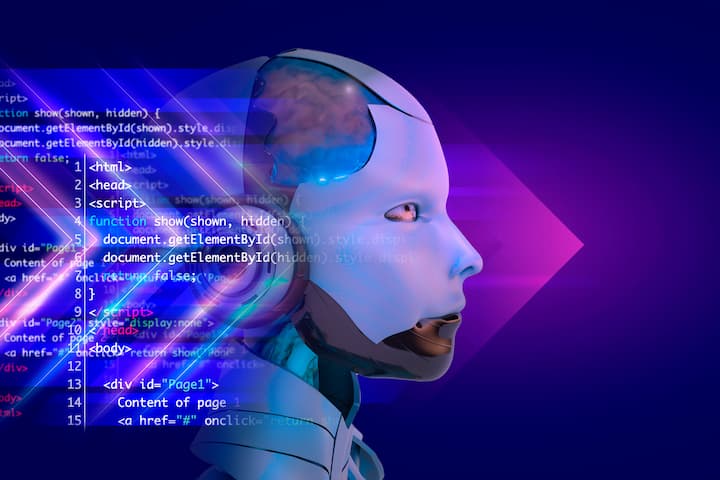
While vibe coding offers incredible speed and accessibility, there's a potential downside: it can lead to shallow learning. When AI writes most of the code, developers risk losing touch with the underlying logic, architecture, and best practices of software engineering. Experts warn that over-reliance on AI-generated code can introduce technical debt, making future maintenance more challenging.
Metana: Structured Learning for AI-Driven Coding
At Metana, we recognize the power of AI-assisted coding, but we also emphasize the importance of understanding what’s happening under the hood. Our structured approach ensures that students don’t just rely on AI-generated solutions but also grasp the fundamentals of:
- Software architecture – Designing scalable and maintainable applications.
- Debugging and problem-solving – Understanding errors beyond just feeding them back into AI.
- Optimizing AI-assisted workflows – Learning when to trust AI and when to intervene manually.
As Andrej Karpathy puts it, "You fully give in to the vibes, embrace exponentials, and forget that the code even exists." While this represents a new era of software creation, developers must ensure they still understand what their AI-generated code is doing.
The Future of Coding: AI + Structured Learning
Vibe coding is here to stay, and it’s transforming the way software is built. However, it’s crucial to balance automation with deep technical knowledge. Structured learning programs, like those offered by Metana, help developers not only use AI tools effectively but also build a strong foundation in software engineering.
For those interested in structured learning, programs like Metana's Full Stack Software Engineering Bootcamp offer a comprehensive curriculum that balances AI-assisted coding with foundational software development skills. (Join Metana's Coding Bootcamps)
For further insights, you can explore more about vibe coding:
- Vibe Coding on Wikipedia
- Business Insider: The Rise of AI Coding
- What is 'Vibe Coding'? Here's how I do it...
Embrace the future of coding with AI, but remember, structure still matters! 🚀
If you already code and want to get this good with AI tools, Metana's AI Tools Bootcamp for Developers covers Claude Code, Cursor, AI agents and RAG in 4 weeks, part-time.

Written by
Metana Editorial
Powered by Metana Editorial Team, our content explores technology, education and innovation. As a team, we strive to provide everything from step-by-step guides to thought provoking insights, so that our readers can gain impeccable knowledge on emerging trends and new skills to confidently build their career. While our articles cover a variety of topics, we are highly focused on Web3, Blockchain, Solidity, Full stack, AI and Cybersecurity. These articles are written, reviewed and thoroughly vetted by our team of subject matter experts, instructors and career coaches.