Breaking into Web3 often feels intimidating. Is it only for developers? Do you need to be a crypto trader? Is it too late to pivot your career?
In a special collaboration between Metana and The Rise Up Morning Show, industry practitioners came together for a candid, no-fluff conversation on what it actually means to work in Web3; and how people from all backgrounds can get started.
This article captures the key insights shared during that discussion, structured directly around the themes and perspectives raised by the panelists.
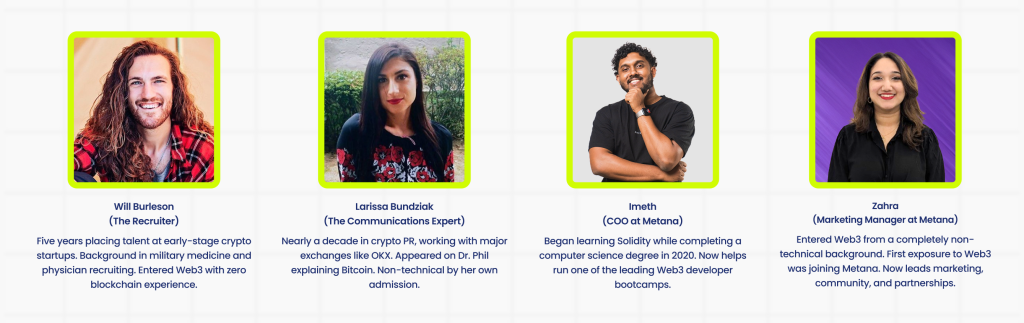
Meet the Panel: Metana × The Rise Up Morning Show’s Career Panel
Debunking the Biggest Myth About Web3 Careers
One of the strongest moments in the discussion came when the panel directly addressed a persistent myth: that Web3 careers are only for hardcore developers, early crypto investors, or young technical founders.
Zahra, Marketing Manager at Metana, challenged this idea by reflecting on her own transition into the space:
“There’s this misconception that in order to get into Web3 or tech, you need to inherently be really good at coding or math from a young age. That’s just not true. There’s a space for everyone here.”
Web3 is not a single profession, but an interconnected ecosystem of roles. Engineers build the infrastructure, but recruiters, operations managers, marketers, PR professionals, and community builders are equally essential.
Will Burleson, a crypto recruiter working with early-stage startups, reinforced this perspective:
“Web3 isn’t one job title. It’s an ecosystem. There are sales roles, community roles, marketing roles, ops roles; there are so many vectors to work your way into the space.”
How Can You Start a Career in Web3: Advice from the Panel
The panel emphasized that progress in Web3 comes from focused, intentional action rather than trying to understand everything at once. These are the practical steps the speakers consistently recommended.
1. Choose One Focus Area and Start There
Trying to learn all of Web3 at once was strongly discouraged during the discussion.
Zahra, advised beginners to narrow their scope:
“If you heard seven different terms you’re curious about, just choose one. Drill down on that, then move on to the next.”
Panelists encouraged identifying what naturally interests you whether that is blockchain technology, financial applications, community building, marketing, or operations and committing to that area first. Depth creates clarity and confidence.
2. Get Active on Social Media and in Communities
Visibility and participation were described as essential entry points into the Web3 ecosystem.
Will Burleson, crypto recruiter, highlighted the importance of consistent engagement:
“Being active on Twitter and in Discord communities sounds simple, but it’s one of the most effective ways to get into the space.”
Rather than observing silently, contribute value by asking thoughtful questions, helping others, and engaging with projects you genuinely care about.
3. Learn from Accessible Beginner Friendly Sources
Cutting through jargon early can prevent frustration and burnout.
Larissa Bundzia, shared the resources that helped her understand Web3 without a technical background:
“That podcast episode was my aha moment. It breaks everything down from first principles without assuming you already understand crypto.”
She specifically recommended starting with the Tim Ferriss podcast episode The Quiet Master of Cryptocurrency featuring Naval Ravikant and Nick Szabo, as well as The Little Bitcoin Book for real world context and narrative based learning.
4. Attend Events Strategically
Events were described as powerful accelerators when approached intentionally.
Imeth, Chief Operating Officer, at Metana, shared an insider perspective:
“Don’t pay for the main conference. Go for the side events.”
Conferences such as ETHDenver, Token2049, and DevConnect host numerous free side events including networking mixers, workshops, and hacker houses. These environments often create more meaningful connections than large paid stages. Platforms like Luma were recommended for discovering events.
5. Consider Structured Learning When Needed
The panel acknowledged that self learning does not work for everyone, particularly in a space filled with technical jargon.
Zahra explained:
“Not everyone can self learn effectively, and that has nothing to do with intelligence. Sometimes people just need guidance.”
Instructor led programs like Metana’s Web3 Bootcamp, with dedicated support were positioned as a way to provide structure, clarity, and accountability for those transitioning into Web3 development roles.
What Web3 Work Culture Is Really Like
Web3 ecosystem itself is seen as decentralized, fast-moving, and ownership-driven. Teams are often remote, hierarchies are flatter, and outcomes matter more than rigid processes.
Will Watson offered a candid take:
“If you’re looking for strict nine-to-five structure, Web3 probably isn’t for you. But if you want autonomy and you’re willing to take ownership, it can be incredibly rewarding.”
Despite the pace, the culture was consistently described as collaborative, with relationships and trust at the center of how work gets done.
Are You Too Late To Enter A Career in Web3?
This concern comes up constantly. The fear of having “missed the boat” stops many people from even exploring Web3 careers.
You’re not late. You’re exactly where you need to be.
Web3 is still forming. New roles are being created. Career pathways are being established. The industry needs diverse perspectives and backgrounds.
Zahra’s closing advice resonated:
“Don’t be afraid to ask the stupid question. Everyone who sounds like they know everything felt like the idiot in the room at some point.”
The Web3 community values curiosity. People explain concepts willingly because they remember not knowing themselves.
Your Next Step
The panel made one thing abundantly clear: Working in Web3 is accessible to anyone willing to learn and engage. The barrier isn’t technical knowledge or age; it’s taking that first step.
If you’re ready to transition into Web3 development with comprehensive support, Metana’s Web3 bootcamp provides instructor-led training, career coaching, and a job guarantee. The program is designed for people from all backgrounds; no prior coding experience required.
Frequently Asked Questions
Do I need a technical background to work in Web3?
No. While developer roles require coding skills, Web3 offers extensive opportunities in marketing, community management, operations, PR, legal, and business development. Many successful professionals entered the space from non-technical backgrounds.
How can I start a career in Web3 or Blockchain technology?
Start by choosing one Web3 area to focus on instead of learning everything at once. Stay active in communities on X and Discord, learn from beginner friendly resources, attend free side events around major conferences, and consider structured programs if you need guidance, accountability, and a clear entry path into Web3.
What’s the lowest barrier to entry for Web3 careers?
Community management and social media roles offer the easiest entry. They require genuine interest in the space, strong communication skills, and active participation in crypto communities. These positions can lead to specialized roles in growth, marketing, or operations.
Is it too late to switch careers into Web3 at 45 or older?
Not at all. The industry is maturing and actively seeking experienced professionals from traditional sectors. Companies working with institutions value the credibility and expertise that veteran finance, legal, and operations professionals bring.
How important are crypto conferences for networking?
Extremely valuable, but skip expensive main events. Side events at conferences like ETH Denver, Token 2049, and DevConnect offer free attendance, better networking, and direct access to founders. These casual settings often lead to real opportunities.
What’s the time commitment for learning Web3 development?
Metana’s full-stack Web3 bootcamp runs about seven months, covering everything from basic development to Solidity smart contracts. However, non-technical roles can start with just a few hours per week of community engagement and self-learning.
Resources & People to Connect With
If you want to go deeper and stay plugged into conversations shaping the future of work, Web3, and emerging tech, these resources are a great place to start.
🎓 Metana
🎙️ Shows & Podcasts
🎧 Must-Listen Conversations
Stay future focused. Build the kind of career you actually want.

Written by
Metana Editorial
Powered by Metana Editorial Team, our content explores technology, education and innovation. As a team, we strive to provide everything from step-by-step guides to thought provoking insights, so that our readers can gain impeccable knowledge on emerging trends and new skills to confidently build their career. While our articles cover a variety of topics, we are highly focused on Web3, Blockchain, Solidity, Full stack, AI and Cybersecurity. These articles are written, reviewed and thoroughly vetted by our team of subject matter experts, instructors and career coaches.
More from Metana Editorial →